Signs a house is settling
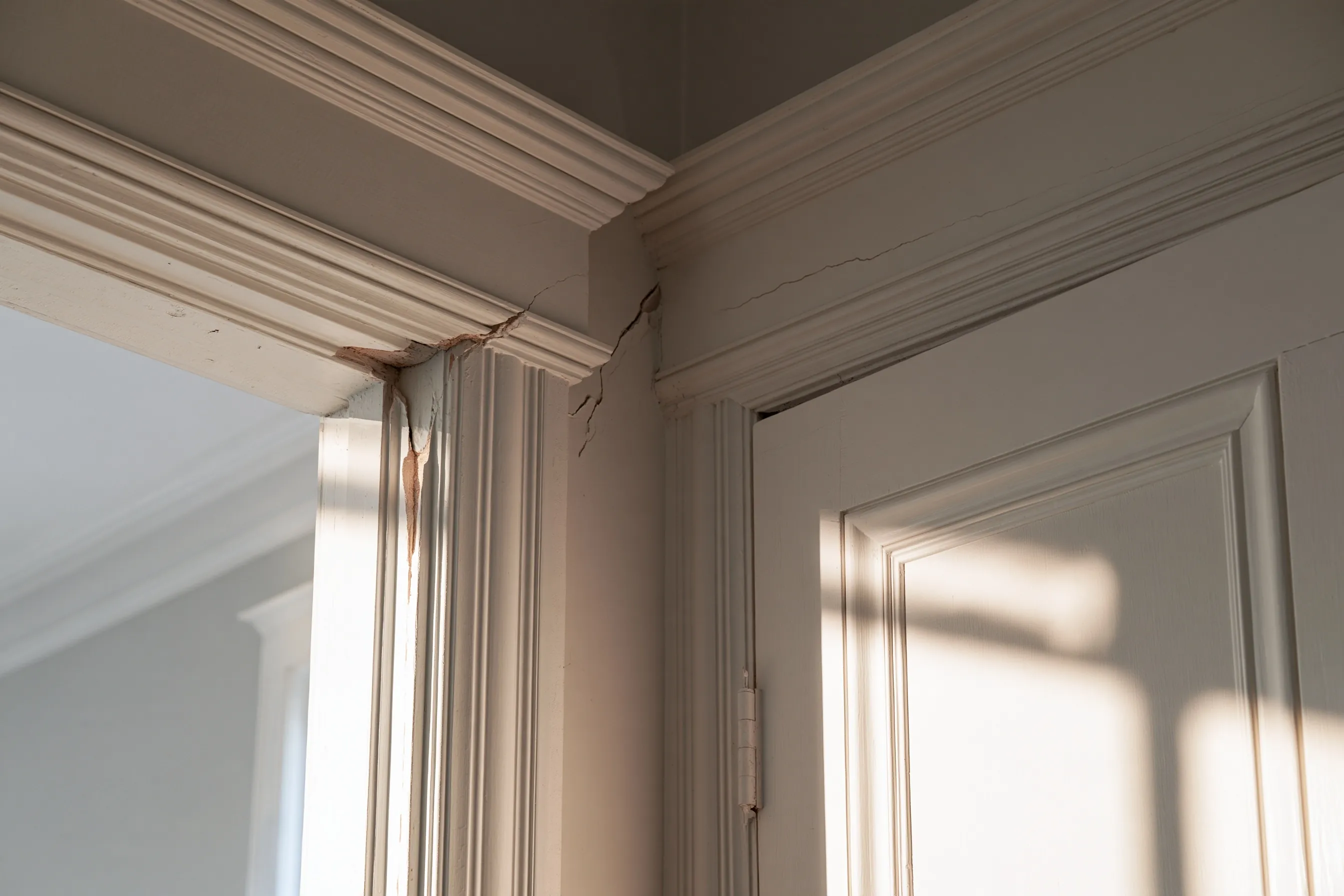
Sloping floors, gaps above doors and windows, sticking doors and cracks that taper or step at corners are all worth a closer look. HUD ties tapered cracks to differential settlement, for example under a porch or bay with an inadequate foundation.
HUD describes settlement as slow rather than dramatic, which leaves time to work out the cause. A leaning wall or a slope in motion is the exception. A level on the floor and a dated pencil line at each end of a crack give the visit real numbers.
Why houses settle
HUD names the site, the soil, earthquakes, water in or on the ground and weak design or materials as what causes foundation failure. Its poor soil covers peat and other organic ground, silt, and fill placed without compaction in layers.
The state Department of Natural Resources reports peat deposits in 28 of Washington’s 39 counties, most of them in the Puget Sound basin, and describes peat as subject to large settlement when loaded or dried. Whether a given Burien lot has peat or fill is for a geotechnical look to say.
Water plays a part as well: it can wash fines from beneath a footing and weaken the soil, as HUD notes.
Engineers, permits and hazard areas
For the cause of settlement, HUD’s guidance is to consult a structural or geotechnical engineer who does this work. It is federal advice and not a Burien rule. Separately, Burien’s building official can require a registered design professional when documents must be prepared by one.
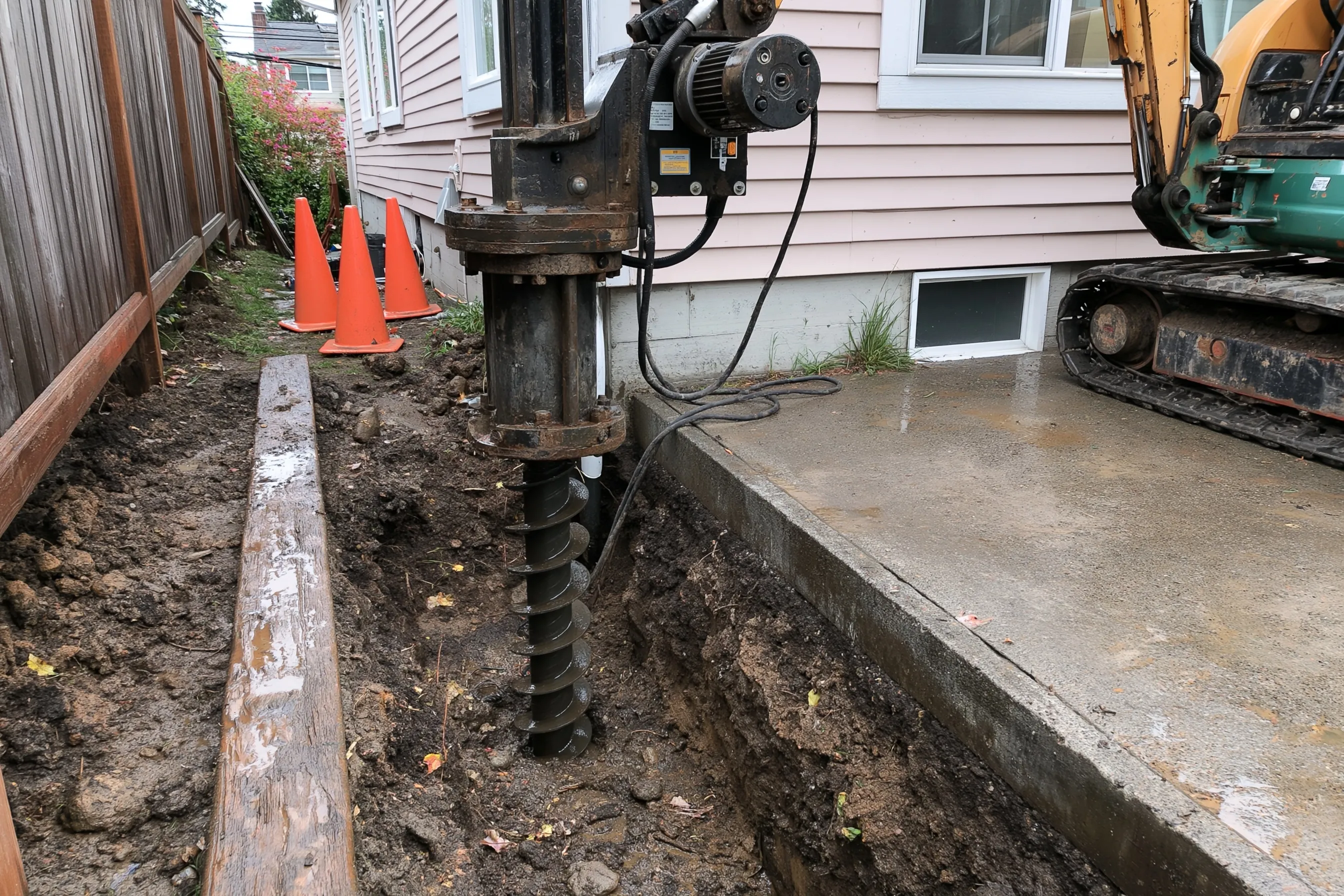
A pier job beside the footing is a repair to a building, which Burien’s code says needs a permit, and permit exemptions do not apply on critical areas, steep slopes or landslide hazard areas. Ask the permit center whether piers or underpinning need one. Building in a mapped geologically hazardous area may involve more review, and Burien’s code says such building should be avoided when the risk cannot be reduced to a comparable level.
What changes the cost
Piering is priced from the house and the ground. The factors:
- How many piers the footing needs and where
- Depth to firm bearing ground, which a geotechnical look can estimate
- Access beside the foundation for digging and equipment
- An engineer’s design and any permit
- Utilities, patios and landscaping that must be moved and restored
What Burien lots and rules add
Burien’s hazard chapter covers erosion, landslide and seismic areas, and exempts slopes with a vertical change of up to 10 feet that are not part of a larger steep-slope system from designation. A lot with a bigger slope may fall under the chapter, so the city’s mapping and the permit center settle it.
DNR’s portal shows liquefaction susceptibility as a general guide, and its notes say peat may deform in shaking and need site-specific analysis. City code can change, so confirm the current text.
Cracks are covered under foundation crack repair. A floor that slopes over a crawlspace can be a post problem and not a footing problem, so the crawlspace post and beam repair page is worth a look too. The remaining services are on the Burien Foundation Repair home page.