Burien Foundation Repair serves Normandy Park, which is about 4 road miles from Burien, for a bolting job, rotted posts, a settling corner, a cracked wall or water at the footing.
Normandy Park is small, at about 6,700 residents, and its housing is older and nearly all one-unit homes: about 80 percent of homes predate 1980, about 47 percent predate 1960 and about 85 percent are one-unit homes, attached or detached. The median home dates from 1962 and the median owner-occupied value is $1,014,100.
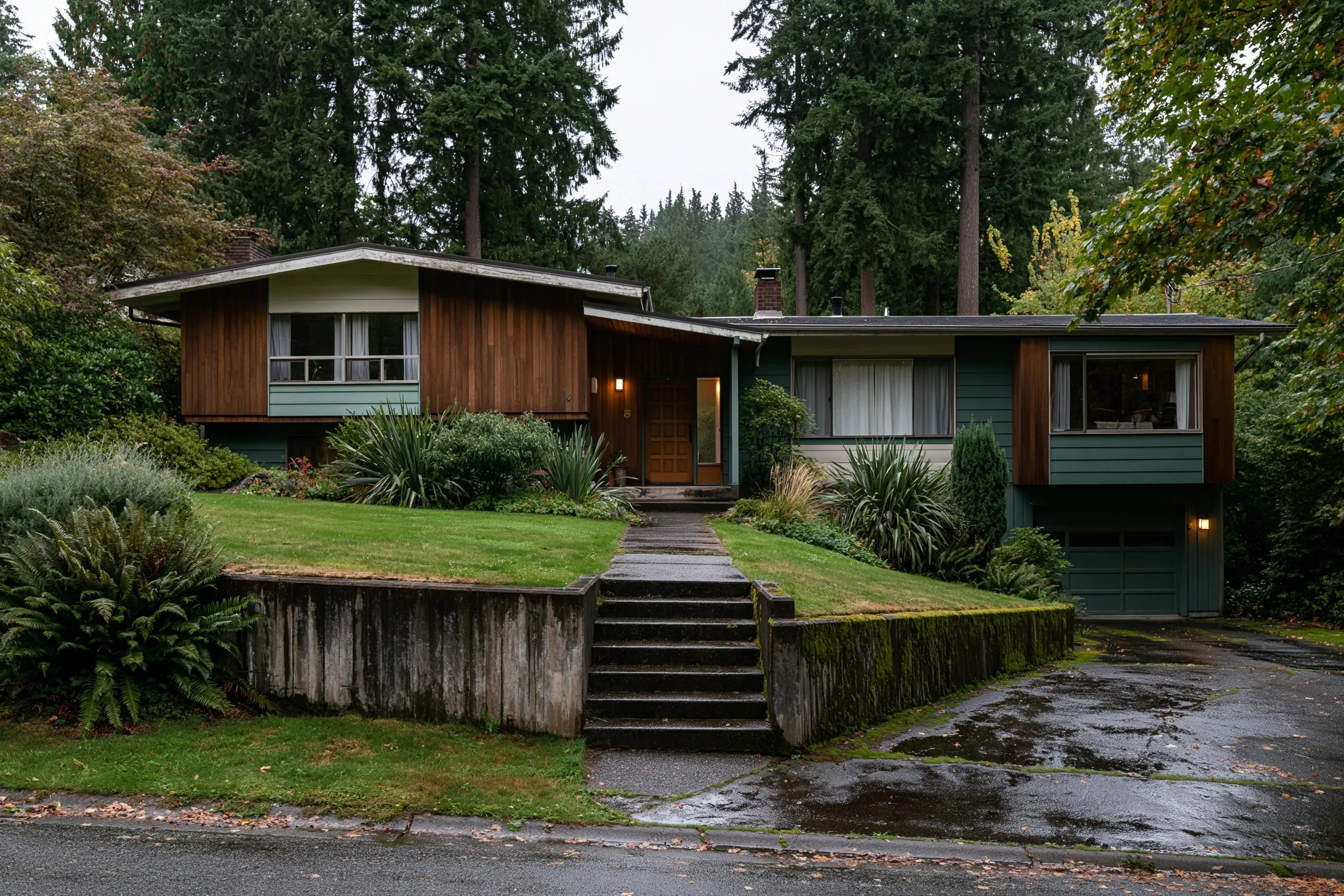
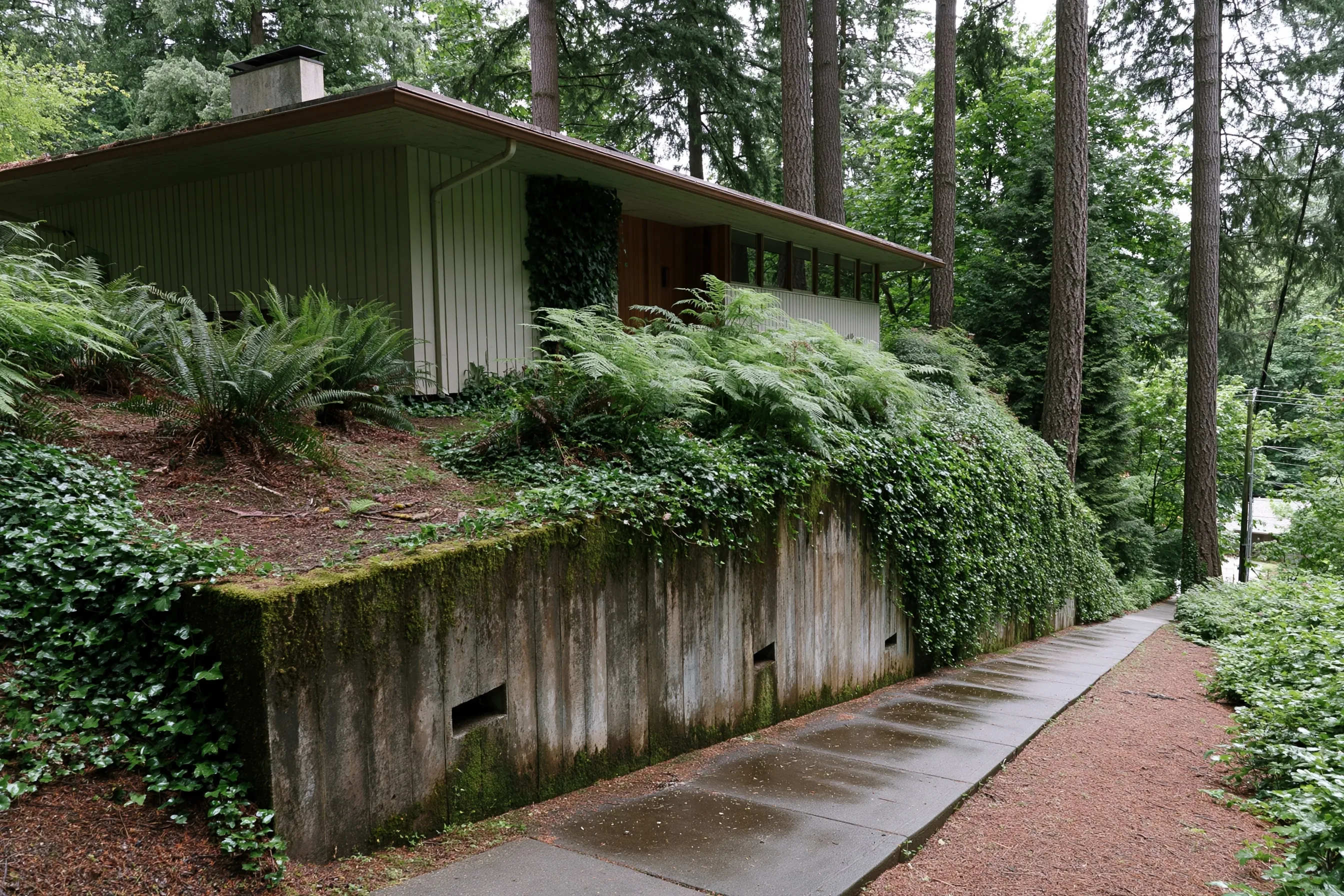
House in Normandy Park with a poured-concrete basement wall
Original request
Three narrow cracks that were painted over once and have come back
Cracks
Three, each about 3 to 8 feet long, none wider than a pencil line
Method
Sealed from inside with epoxy or polyurethane injection
Not included
Repainting
Cost
$2,400
In this example, the owners of a house in Normandy Park have painted over three narrow cracks in a basement wall, and the lines have shown through again. None is wider than a pencil line.
A house here may or may not have its sill plate bolted to the foundation. The page on seismic retrofit and foundation bolting describes bolting and plywood bracing and their limits.
Slope changes the question. Before a pier is chosen, the thing to know is why the house moved, which foundation settlement and piering explains along with the limits of each method.
Foundation crack repair
A crack in a retaining wall or foundation wall prompts the same first question: is it moving? The page on foundation crack repair explains the difference between a shrinkage crack and a moving one.
Foundation drainage
On a sloped lot there is one question: where does the water go once it leaves the downspout? The foundation drainage page covers gutters, grading and footing drains.
Homes and foundations here
About 34 percent of Normandy Park homes went up between 1960 and 1979 and only about 9 percent date from 2000 or later. Houses of that age are worth a look underneath, and what a particular house has is something to check in the crawlspace.
Normandy Park sits along Puget Sound, and a lot with a steep grade is a lot where the permit and hazard questions come up first.
Slopes and mapped hazards
Washington’s rules tell cities to classify erosion, landslide and seismic hazards, and say that building in a geologically hazardous area must be avoided when technology cannot reduce the risks to acceptable levels. How Normandy Park maps and applies this to a given lot is a question for the city.
DNR’s Geologic Information Portal shows landslide hazards as a general guide, and King County’s landslide mapping page points to the iMap viewer’s Environmentally Sensitive Areas layer for potential landslide hazard areas. Neither one replaces the city’s own answer for your address.
Before the work is scoped, Normandy Park’s permit office can say whether the repair needs a permit and whether a hazard area is mapped on the lot. Start there.
Contractors who repair buildings must register with Labor and Industries unless an exemption applies, and engineering work belongs to registered engineers, so check before you sign.
Slope changes how the work is scoped, and the city may have rules for steep or mapped sites. We look at the lot first and say when an engineer or a permit may be involved.
Is my 1960s house bolted down?
Check the crawlspace for anchor bolts along the sill plate and plywood on the short walls. If you cannot tell, a visit will.
Does a retaining wall crack count as a foundation crack?
It can show the same kind of movement, but retaining walls are not part of what we offer. We look at the house foundation.
What is at the Normandy Park address, and how does the lot lie? Describe cracks, sloping floors, damp or rotted wood, and give the age of the house. A picture of the lot with any retaining wall next to the house lets us understand the setting before a visit. We'll get back to you soon with an estimate or any questions we have. Estimates are free and there's no obligation.