Burien Foundation Repair serves SeaTac, which is about 5 road miles from Burien. Houses with crawlspaces get the bolting and post work, and any house can have cracks, water or settlement to look at.
SeaTac counts about 32,400 residents. Roughly 63 percent of its homes predate 1980, but only about 45 percent of the housing is one-unit homes and about 43 percent is in buildings of five or more units, so this page speaks to house owners and not to apartment buildings.
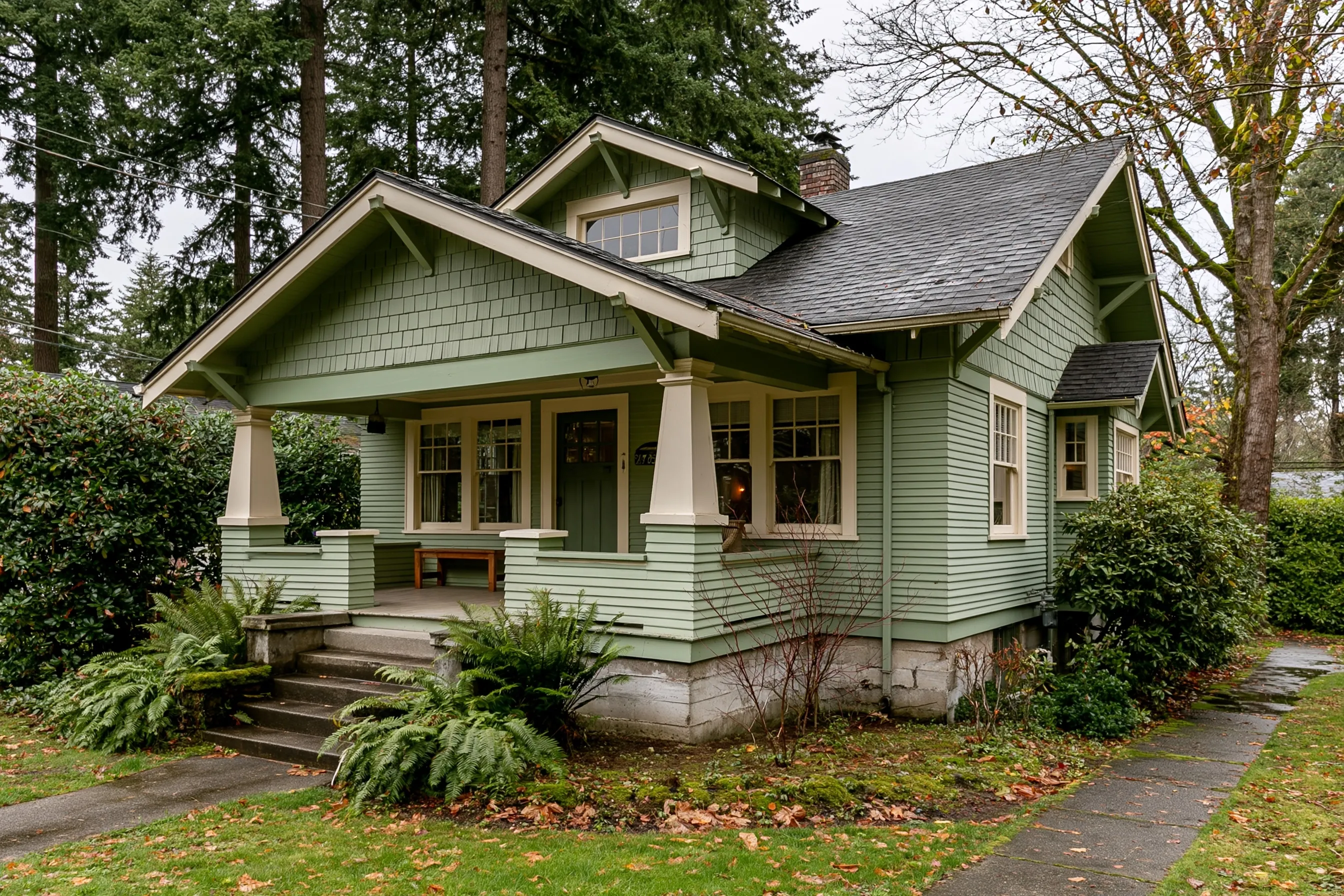
1920s Craftsman bungalow in SeaTac with a concrete stem wall
Original request
Tie the house, about 1,200 sq ft, to its foundation before the next big earthquake
Outside
A wide porch on tapered columns and a concrete wall at its base
Work
Anchor bolts and plates along the sill, and bracing on short walls as the plan calls for
Not included
Permit costs and any engineer’s plan
Cost
$7,800
In this example, the owners of a 1920s Craftsman bungalow in SeaTac want the house tied to its foundation. It stands on a concrete stem wall under the porch and walls, and it has not been bolted.
A house on a crawlspace may or may not have its sill plate bolted down. Bolting and bracing the short walls is how that gets addressed, and the page on seismic retrofit and foundation bolting sets out what the work does and does not do.
Crawlspace post and beam repair
When a floor over a crawlspace bounces or slopes, the cause may sit in the posts, pads or beams. The crawlspace post and beam repair page describes those parts and the effect damp has on timber.
Foundation settlement and piering
A corner that has dropped starts with a question about cause, and only then about piers or underpinning. The page on foundation settlement and piering explains both.
Foundation crack repair
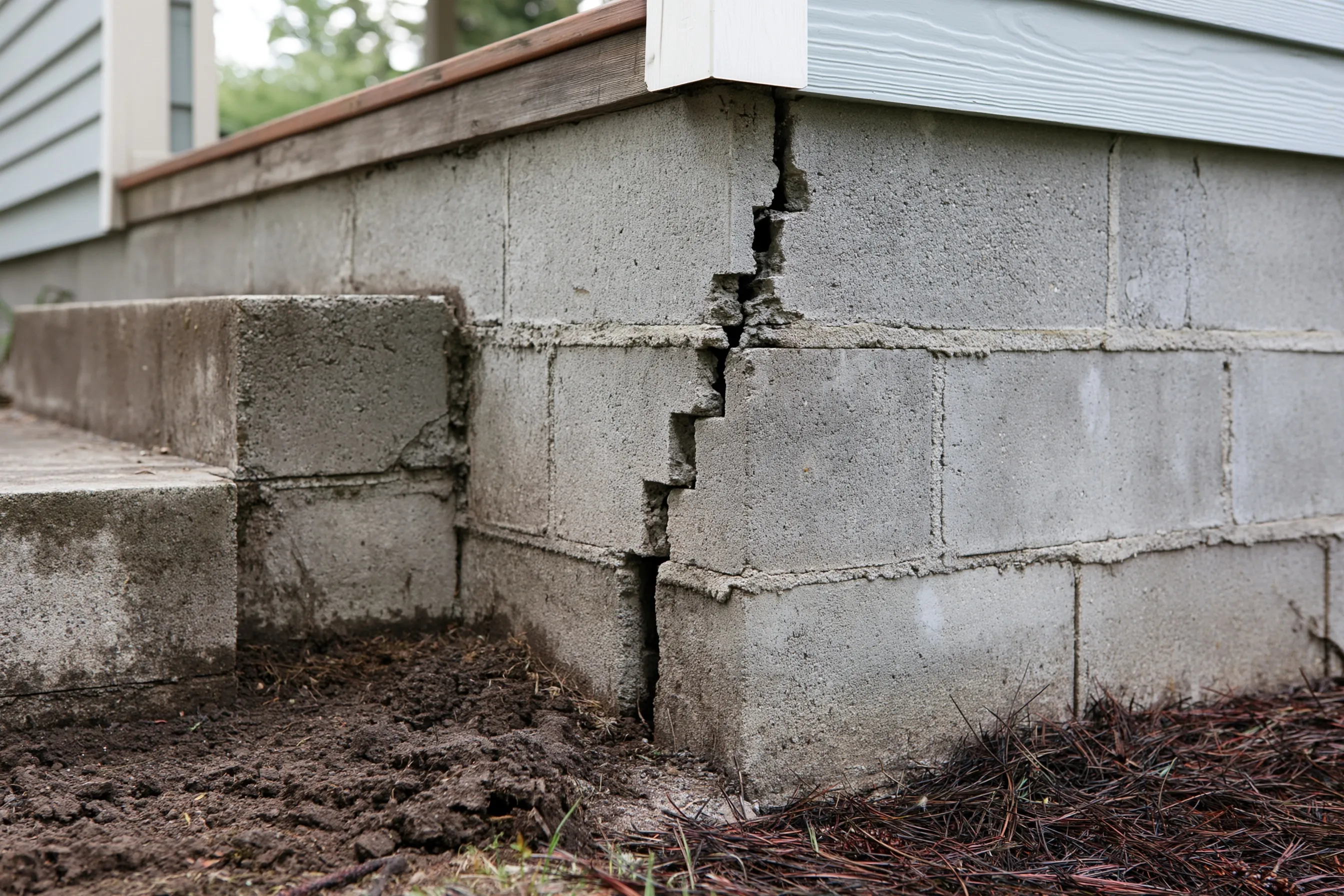
A crack in a foundation wall can be harmless or can show movement. The page on foundation crack repair explains how to tell, and what sealing can and cannot do.
Foundation drainage
In SeaTac, a damp wall base is a drainage question before it is a repair question, and the foundation drainage page covers gutters, grading and footing drains.
Homes and foundations here
The median home in SeaTac was built in 1972 and the median owner-occupied value is $519,700. Because a large share of the housing is multi-unit, many buildings here are apartments. If you live in a condo or townhome, foundation work on the building is usually decided by the association, so ask it before calling anyone.
Ground and hazard areas
Washington’s rules for geologically hazardous areas define seismic hazard areas to include settlement and soil liquefaction, which occur in low-density soils with a shallow groundwater table. Whether any address in SeaTac is in such an area is a question for the city.
DNR’s Geologic Information Portal shows liquefaction susceptibility and landslide hazards as a general guide, not a statement about one lot.
SeaTac’s permit office sets the rules for a repair there. Check with it before work is scoped on whether a permit applies and whether the property sits in a mapped hazard area.
A contractor working on buildings registers with the state Department of Labor and Industries, with some exemptions, and engineering is reserved to registered engineers. Look anyone up before you hire them.
Our work is on houses. For an apartment or condo building, the owner or association decides and hires.
How do I find out if my lot is in a hazard area?
Ask SeaTac’s permit office whether the property lies in a mapped hazard area. DNR’s Geologic Information Portal also shows liquefaction and landslide layers as a general guide, though not a reading of one lot.
Is my 1970s house bolted to its foundation?
You can check in the crawlspace for anchor bolts along the sill plate and sheathing on the short walls. If you are unsure, we can look.
Which SeaTac address, and does the house sit over a crawlspace or have a basement? We'll get back to you soon with an estimate or any questions we have. Estimates are free and there's no obligation.